Hornstrandir: Hesteyri to Hornvík
Arctic-fox wilderness at the edge of the Arctic Circle, reached only by boat.
- Distance
- 23 km
- Point to point
- Time
- 2–3 days
- Ascent
- 850 m
- Max 430 m
- Difficulty
- Expert
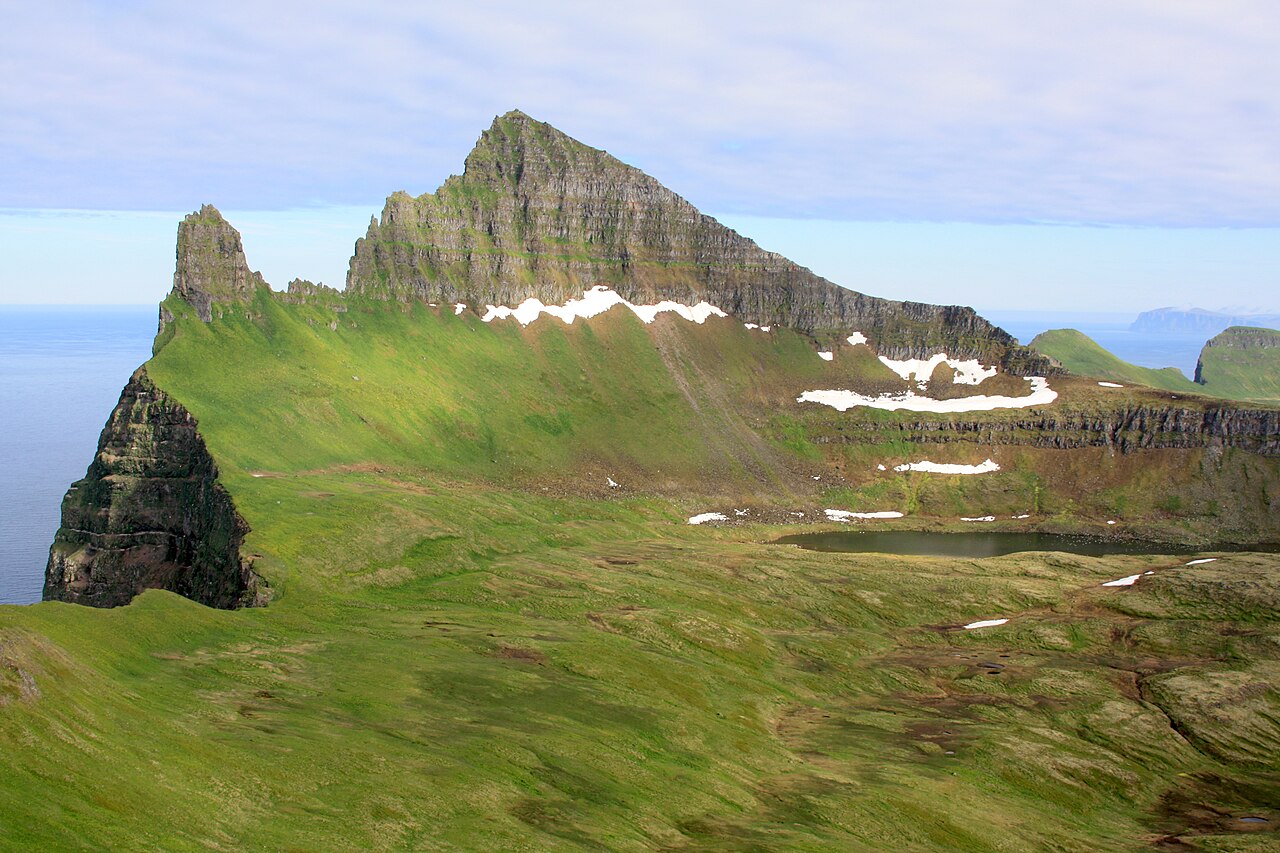
Hornstrandir hiking is Iceland at its wildest. This remote peninsula at the tip of the Westfjords, just south of the Arctic Circle, has no roads, no shops and no permanent residents; its last farms were abandoned in the mid-twentieth century and the area has been a protected nature reserve since 1975. The only way in is by boat, and what you find is a landscape of steep fjords, flower-filled valleys, empty beaches and huge seabird cliffs.
The route from Hesteyri to Hornvík covers 23–24 km over two to three days, crossing the Kjaransvíkurskarð pass (426 m), the Skálakambur ridge and the Atlaskarð pass between bays and finishing beneath the towering cliffs of Hornbjarg. Arctic foxes are protected here and unusually unafraid of people, and you may see seals and whales offshore. Trails are faint in places and marked only by cairns, so map and navigation skills matter.
This is an expedition rather than a hut-to-hut walk. You carry everything, including a tent, stove and all your food, and must be self-sufficient for several days in a place where help is far away and weather can close in for days. The reward is solitude on a scale that is hard to find anywhere else in Europe: you may go a whole day without meeting another hiker, with only foxes, seabirds and the sound of the surf for company.
Highlights
- The abandoned village of Hesteyri and the ruins of the old whaling station and herring factory nearby
- Arctic foxes, often curious and unafraid
- Wild, empty bays such as Hlöðuvík and Hælavík
- The bird cliffs of Hornbjarg towering over Hornvík
- Total remoteness: no roads, no services, few people
Hornstrandir itinerary
Hesteyri and over to Hlöðuvík
The boat drops you at Hesteyri, an abandoned village on Jökulfirðir with old timber houses; the ruins of a whaling station and herring factory lie across the inlet. From here the trail climbs onto the Hesteyrarbrúnir shoulder and over the Kjaransvíkurskarð pass (426 m), the highest point of the trek, then descends the Kjaransvík valley. Ford the Kjaransvíkurá river at the shore and follow the coast to the wide beach at Hlöðuvík (about 14 km, 6–7 hours). Expect snow on the pass in early summer and use your map; cairns are the only markers.
Over Skálakambur and Atlaskarð to Hornvík
From Hlöðuvík the trail climbs steeply up the north side of the Skálakambur ridge (350 m), traverses the slopes above the wild bay of Hælavík, crosses the Atlaskarð pass (327 m) and descends to Rekavík bak Höfn, then follows the coast to Höfn in Hornvík (about 10 km, 4–5 hours). Hornvík is the most visited bay on Hornstrandir and usually your boat pickup. Sheltered camping at Höfn, a summer ranger and a broad sandy beach make it a natural base. Snow can lie on the pass well into July, and the descent can be steep and loose. With a spare day you can drop down to Hælavík's beach and camp there, in prime fox country with some of the most beautiful campsites on the reserve; rivers at the bay heads are best forded at low tide, so carry a tide table.
Hornbjarg and day hikes from Hornvík
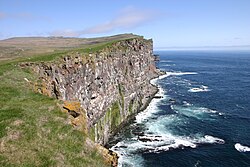
Many hikers spend an extra day at Hornvík to walk up onto Hornbjarg, a vast sea cliff crowded with nesting guillemots, razorbills, fulmars and puffins in summer. The edge is sheer and grassy; stay well back, especially in wind or fog. Other options include the long walk on to the Hornbjargsviti lighthouse at Látravík or exploring the valley behind the bay.
Getting to the trailhead
Hornstrandir is reached only by boat. Scheduled summer boats run from Ísafjörður and Bolungarvík to Hesteyri, Hornvík and other bays, and from Norðurfjörður in the Strandir region to Hlöðuvík, Reykjarfjörður and other eastern bays. Boats usually operate from early June to late August or early September, with fewer departures early and late in the season, and can be cancelled in rough seas, so build a spare day into your plans. Book in advance, especially for a pickup. Ísafjörður has an airport and bus links; you can leave a car there.
Where to stay
This is a tent trip. Camping is allowed only at designated campsites, which usually have a simple toilet and a water source but no other facilities, and a tent may stay at most one week in one place. There are no huts on the trail itself. The only services are summer lodging and meals at the Doctor's House (Læknishúsið) in Hesteyri, at the start, and FÍ's hut in the Hornbjargsviti lighthouse at Látravík, beyond Hornbjarg (late June to August, book ahead). A few private houses in the old settlements are used by their owners in summer. In Ísafjörður, before and after the trip, there are hotels, guesthouses and a campsite. Carry all your food plus extra in case boats are delayed.
Best time to hike
The practical season is late June to mid-August, matching the boat schedules. In June there is often snow on the passes and in the gullies; by late July most routes are clear. Days are almost endlessly light in June and July, and the bird cliffs are at their busiest in early summer. Even in high summer, expect cold, wet and windy weather, with fog that can sit for days.
Safety
Rescue can take many hours or longer, and there is no mobile coverage in large parts of the reserve. Carry a satellite messenger or PLB, a map and compass or GPS, and full waterproofs and warm layers. Leave a travel plan at safetravel.is. Outside high summer (1 March–15 June and 1 September–1 November) you must register your trip electronically with the Environment Agency (Umhverfisstofnun) in advance. Campfires are banned, dogs are not allowed and drones need a permit. Cross rivers where they spread out across beaches, check tides before rounding headlands and keep away from cliff edges. Polar bears are very rare, but sightings have been reported; if you see one, keep your distance and call 112.
Plan & book
Book your Hornstrandir hike
 Transport
Boat to Hornstrandir
Scheduled summer boats from Ísafjörður to Hesteyri, Aðalvík and Hornvík.
Westfjords ferry operators
Guided tourGuided Hornstrandir Expeditions
Small-group treks with boat transfers from Ísafjörður and a guide who knows the tides and the foxes.
Westfjords operators1–6 days
Gear rentalHiking & Camping Gear Rental in Reykjavík
Rent tents, sleeping bags, stoves, poles and microspikes instead of flying them over.
Reykjavík outfitters
Online booking opens soon. Press any button to get notified when it does.
Hornstrandir FAQ
How do I get to Hornstrandir?+
Only by boat. Summer services leave from Ísafjörður and Bolungarvík for Hesteyri, Hornvík and other bays, and from Norðurfjörður to the eastern side. Boats generally run from early June to late August or early September and can be delayed by weather, so book in advance and allow a buffer day.
Do I need a guide for Hornstrandir hiking?+
Not necessarily, but you must be completely self-sufficient and confident navigating without marked trails. If you have not done remote multi-day backpacking before, a guided trip is a much safer way to experience the reserve.
Are there polar bears in Hornstrandir?+
Polar bears are not resident in Iceland, but very occasionally they drift over on sea ice from Greenland, and a few sightings have been reported in the Westfjords. The risk is very low. If you think you see one, move away calmly and call 112.
Will I see Arctic foxes in Hornstrandir?+
Very likely. Arctic foxes are protected in the reserve and are often bold around campsites. Do not feed them, keep your food and rubbish secure, and follow the reserve's rule: keep at least 40 m from dens and stay no longer than 20 minutes, especially in early summer when there are cubs.
Are there huts or shops in Hornstrandir?+
No shops, and no huts on the trail itself. The only services are summer lodging and meals at the Doctor's House in Hesteyri and FÍ's Hornbjargsviti lighthouse hut at Látravík (late June to August, book ahead). Bring all food, fuel and equipment, including spare food in case boats are delayed by weather.
Hike it with a private guide
Guided trips with a licensed Icelandic guide, including transport and huts.
Private guide requests are coming soon
We are lining up licensed local guides. Sign up and we will let you know as soon as you can request a tailored quote.
.jpg)